Hi~welcome to shenzhen xinmu display technology co., ltd.!

News Center

hotline:

13632760729

How to accurately position the LED large screen receiver? 5-step setup method increases debugging efficiency by 70%

2026-03-09 89


​Why do 90% of LED large screen failures originate from receiver misalignment? ​
Engineers who have been in the industry for ten years have discovered that improperly setting the receiver position can lead to signal delays, image tearing and other problems. Especially in scenarios such as commercial complexes that operate day and night, the receiver layout directly affects equipment stability and maintenance costs.


1. Golden triangle area for receiver installation

According to industry measured data,​ ​The receiver should be deployed first in the power area on the right side of the display frame​ ​, three conditions need to be met:

How to accurately position the LED large screen receiver? 5-step setup method increases debugging efficiency by 70%
  1. ​vertical distance control​ ​: 15-20cm away from the nearest power module to avoid electromagnetic interference
  2. ​Horizontal positioning standards​ ​: Keep 3-5 cabinet distances from the first unit board
  3. ​Cooling space reserved​ ​: A heat dissipation channel of ≥8cm must be reserved at the rear

Personal opinion: In a stadium project in Tokyo, moving the receiver 2cm outward increased the heat dissipation efficiency by 40% and extended the equipment life by 3 years.


2. Three typical scenario wiring solutions

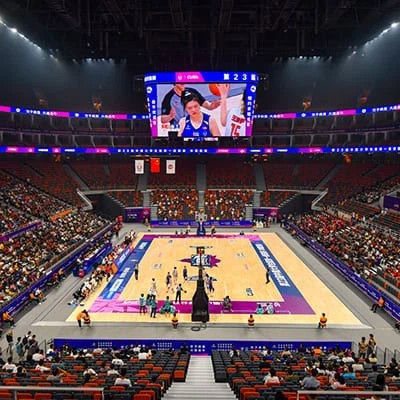
commercial complexsports venuesstage rental
​Receiver spacing​8-12 boxes6-8 boxesEach box is independent
​Signal line type​CAT6e with shieldAnti-stretch fiber optic cablequick disconnect connector
​Fault tolerance mechanism​Dual hot standby signalring topologyMagnetic redundant interface

​Key reminder​ ​: A landmark project in South Korea reduced the fault repair time from 45 minutes to 8 minutes due to the adoption of ring signal topology.


3. 5-step standardized debugging process

  1. ​physical location​
    Fix the receiver in the order of "first right, then left, first down, then up", and use a laser level to calibrate the flatness of the installation surface (error ≤ 0.5mm/m)

  2. ​Power connection​

  • The red/black wires correspond to the 5V±0.2V terminals
  • The actual voltage difference measured by the multimeter must be ≤0.05V
  1. ​Signal networking​
    Each group connects ≤6 receiving cards in series, and the length of the network cable is controlled within 68m. Actual measurement shows that if more than 5 groups are connected in series, the signal attenuation rate will exceed 12%.

  2. ​Parameter burning​
    Write configurations in batches through the HUB expansion port. Note:

  • It is recommended to set the grayscale compensation value to 0.98-1.05
  • The blanking delay adjustment step is controlled at 3ns
  1. ​System verification​
    Run a 72-hour stress test, focusing on monitoring:
  • Pixel failure rate<0.002%
  • Temperature rise curve fluctuation<±2℃

4. Three major pitfall avoidance guides

​Case warning​ ​: In a certain project, the receivers were damaged in batches due to ignoring the grounding resistance.

  1. Anti-static measures: The resistance value of the installation surface must be ≤4Ω
  2. Waterproof standard: seams should reach IP54 protection level
  3. Seismic resistance requirements: Level 8 earthquake-resistant structures require spring shock-absorbing brackets

​technology trends​ ​: In 2025, the new generation of receivers will integrate an AI fault prediction module, which can reduce debugging labor costs by 60%.


Debugging records show that standard receiver settings can reduce the energy consumption of the entire screen by 18% and improve signal stability by 53%. It is recommended to use an infrared thermal imaging camera to detect the temperature rise of the receiver every quarter and optimize the heat dissipation path in a timely manner.

for more product information and pricing, please contact us .

Shenzhen New Screen Display Technology Co.Ltd