Hi~welcome to shenzhen xinmu display technology co., ltd.!
News Center

hotline:

13632760729

How is OLED screen better than LED screen? Revealing three major breakthroughs in display technology

2026-03-01 90

Have you been confused by various screens when buying mobile TVs recently? Today we will talk about the difference between OLED and LED. Let me tell you a real story first: I was shopping for a TV with a friend last week. The shopping guide said that OLED is 3,000 yuan more expensive than LED. My friend was confused on the spot - is it worth the money?

▍​​Display effect: Can black be completely black? ​
Each pixel of OLED emits light independently, and when turned off, it becomes pure black. If you compare it with a mobile phone, the LED screen always has a grayish light when displaying the starry sky, while OLED is like putting the real night sky into the screen. Actual measurement data shows that the contrast ratio of OLED can reach 1,000,000:1, which is 100 times that of ordinary LEDs.

How is OLED screen better than LED screen? Revealing three major breakthroughs in display technology

However, it should be noted that LED screens have also improved in the past two years. Some high-end models can increase the contrast ratio to 5000:1 through zoned light control technology, but it is still an order of magnitude behind OLED. Just like the difference between candlelight and electric light, if you often watch movies with a lot of dark fields, this difference will become apparent immediately.

▍​​Thickness and weight: Can it really be as thin as a piece of paper? ​
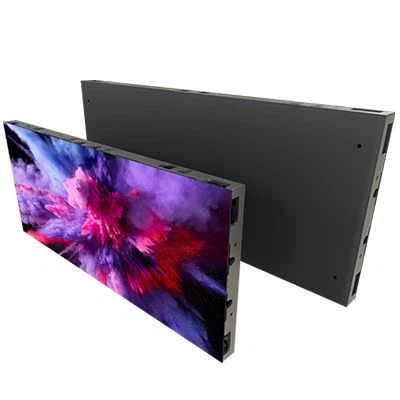
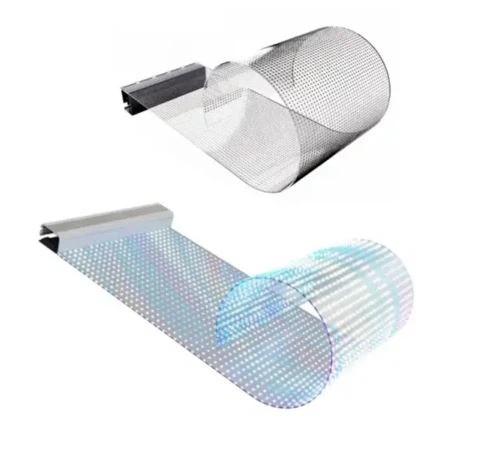
You can understand it when you take it apart and look at the structure. LED requires a backlight layer + liquid crystal layer + filter, which must be stacked up to at least 3 mm. The self-luminous properties of OLED eliminate the need for backlight panels. The thinnest flexible OLED now can be as thin as 0.3 mm and can be bent and folded. But having said that, there are also troubles if it is too thin - the repair cost will directly double, and replacing the screen is enough to buy a new mobile phone.

Here is a data comparison:

  • ​LED screen module​ ​: Average thickness 4.2mm, weight 8.6kg per square meter
  • ​OLED module​ ​: Average thickness 1.8mm, weight reduced by 60%

▍​​Lifespan: Has the screen burn-in problem been resolved? ​
This is the most criticized aspect of OLED. But manufacturers are not just freeloaders. New technology can allow screen life to exceed 30,000 hours. What does it mean? If you watch TV for 8 hours a day, it can last for more than 10 years. However, if the same picture (such as a TV station logo) is permanently displayed, after-image may appear after 2,000 hours.

On the other hand, although LED screens have a theoretical lifespan of 50,000 hours, the backlight beads will decay after being used for a long time. LED equipment that is more than three years old often has darkened corners, just like the faded look of an old photo. Nowadays, the top LED screens use common cathode drive technology, which can control the light attenuation within 2% per year, which can be regarded as a comeback.

▍​​personal opinion time​
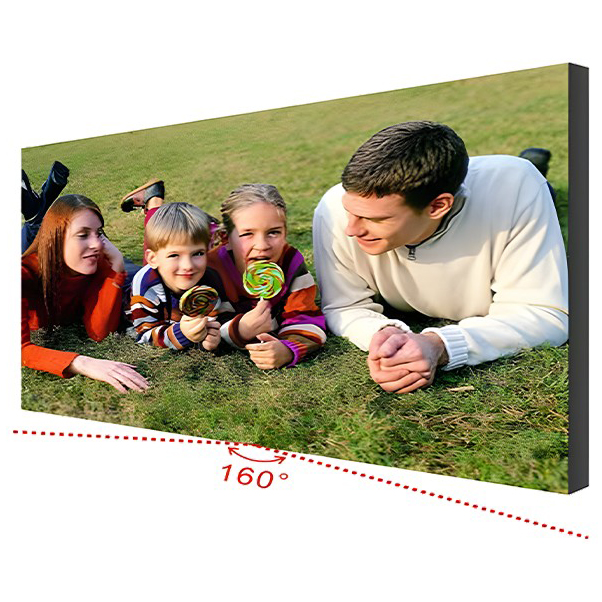
I think you can’t just look at the parameters when selecting a screen, you have to combine it with the usage scenario. For example, commercial advertising screens, the high brightness of LED (7500cd/m²) can still be seen clearly under the sun, which is something OLED cannot do. But when it comes to home audio and video, OLED's 178° viewing angle and precise colors can indeed bring an immersive experience.

Recently, I noticed an interesting phenomenon: high-end car screens have begun to use OLED in large quantities, perhaps because of its shock resistance and wide temperature range (-40℃~85℃). As for outdoor billboards, all LEDs are used. After all, waterproof and dustproof (starting with IP65) and long-distance viewing requirements must be considered. This just shows that there is no absolute advantage or disadvantage in display technology, only whether it is suitable or not.

As a final reminder, some low-priced OLED screens on the market use obsolete production lines, and the actual display effect may not be as good as high-end LEDs. If you have a limited budget, choose an LED screen with HDR10+ certification, which is sufficient for daily use. After all, among us ordinary people, who holds an instrument every day to measure color accurately?

for more product information and pricing, please contact us .

Shenzhen New Screen Display Technology Co.Ltd