Hi~welcome to shenzhen xinmu display technology co., ltd.!

News Center

hotline:

13632760729

LED display suddenly does not light up? Have you tried these check steps?

2026-02-22 114

Ouch! The newly installed large LED screen suddenly turned black and stopped lighting up. This would make anyone jump in panic. Just like novices who make short videos and don’t know “how to quickly gain fans”, many novices who are new to LED displays encounter this situation. Their first reaction is to press the remote control wildly, and the more they press, the more confused they become. Don't panic, let's talk about this today - when the screen doesn't light up, where should you start to check?

LED display suddenly does not light up? Have you tried these check steps?

​You should definitely look at these places first.​

  1. ​Does the power cord play "hide and seek"?"​ ​: I have seen too many cases where the master put the plug on the shelf after installing the screen, but the plug came loose when the wind blew. Especially for outdoor screens, check whether the waterproof plug is plugged in tightly and whether the power switch has tripped. There was a large screen strike on the opening day of a shopping mall, and it was finally discovered that the cleaner had knocked off the plug while cleaning the glass...

  2. ​The signal line is "having a tantrum""​ ​: The network cable between the sending card and the receiving card sometimes causes poor contact with a slight tug. At an exhibition last week, the large screen suddenly went black. The technical guy pressed the crystal head again and the problem was solved. Remember, the buckle of the network cable interface needs to hear a "click" sound to be considered in place.

  3. ​The receiving card is "pretending to sleep""​ ​: The indicator light of the receiving card will flash regularly during normal operation. The most bizarre situation I have encountered is that the receiving card was displaced due to vibration during transportation, and it returned to normal after re-plugging and unplugging. If there are multiple receiving cards, remember to check whether the order of the cascading lines is correct.

​You need to use your brain for advanced troubleshooting​
Sometimes the problem is in the details. For example, there was an interactive floor tile screen installed in a gym that went off during the day and at night. In the end, it was discovered that the voltage was unstable - the air conditioner was fully turned on at night, resulting in insufficient power supply. In this case, you need to use a multimeter to measure the voltage. Normally it should be between 198V-242V.

For another example, the versions of the sending card and the receiving card must match. There was a stage project last year. The old version of the control system could not operate the new screen, so upgrading the software version solved the problem. Here’s a little tip for you: write down the firmware versions of the sending card and receiving card in your phone for easy checking at any time.

​You must prepare these artifacts​
If a worker wants to do his job well, he must first sharpen his tools. Prepare a toolbox containing:

  • Plug-in board with voltage detection (can check the voltage in real time)
  • Spare network cable (don’t use cheap stuff left over from renovations)
  • Insulating tape (used to deal with temporary wire ends)
  • Mobile phone camera (shoot videos at the screen to quickly detect local dead lights)

​Frequently Asked Questions and Answers​
Q: What should I do if the power light doesn’t come on?
A: First check whether the circuit breaker has tripped, and then test whether the socket has power. If three-phase power is connected, remember to check whether the phase sequence is correct - in one factory project, three power modules burned because the neutral and live wires were connected reversely.

Q: What should I do if the signal is out of sync?
A: Eighty percent of the time it is a problem with the sending end settings. Focus on whether the resolution setting is correct. Especially for splicing screens, pay attention to whether the resolution of the entire screen is an integer multiple of the resolution of a single module.

Q: How to deal with local black blocks?
A: First cut off the power and disassemble the module and reinstall it. If it still doesn't work, the module power cord may be loose. The most extreme situation I have encountered is that the heat dissipation glue on the back of the module is too thick, resulting in poor contact. It is normal to scrape off the glue.

​Editor's opinion​
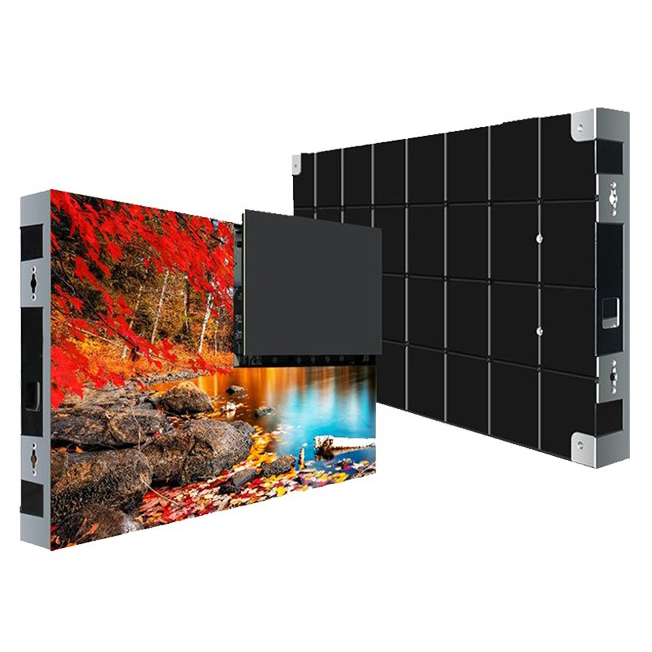
Actually, now that the technology has matured, don’t bear on it if you encounter problems that you can’t solve. For example, in some projects we have come across, post-maintenance is taken into consideration from the design stage - for example, using a box with a quick-release structure, it is more convenient to change modules than light bulbs. Remember, regular dust removal and standardized operation are better than anything else. If problems occur frequently, you may have to consider whether it’s time to upgrade your equipment. After all, the stability of the new generation of displays is not at the same level as the products of five or six years ago.

for more product information and pricing, please contact us .

Shenzhen New Screen Display Technology Co.Ltd